A Community Workshop

Building on Aamir’s Field Note describing the events that lead to a CNC workshop successfully operating and running self build projects for the local community, i was able to take away aspects of the installation which would work well in the spaces within Tingas.

Drawing on some parallels with Tinsley Tingas, Made in Sharrow is located in a former Junior School. One of the projects operated by the workshop enabled young people from the community to take an interest and build a Skateboard Grindbox which in turn they would take ownership over and learn new skills in the process.

A workshop like this would offer people the chance to learn design and woodwork skills in a friendly and safe environment.

Currently in Tinsley there is a need for activities focused around the young people in the community and a similar project to provide the vacant spaces with resources at a low cost and also give young people an outlet to bring down the rates of antisocial behavior caused primarily through boredom.

A workshop permanently based in Tingas could run projects with the aim or engagement and also  provide self built resources to be used in the spaces vacant in Tinsley.


M32 Community Space

M32 Underpass – taking ownership

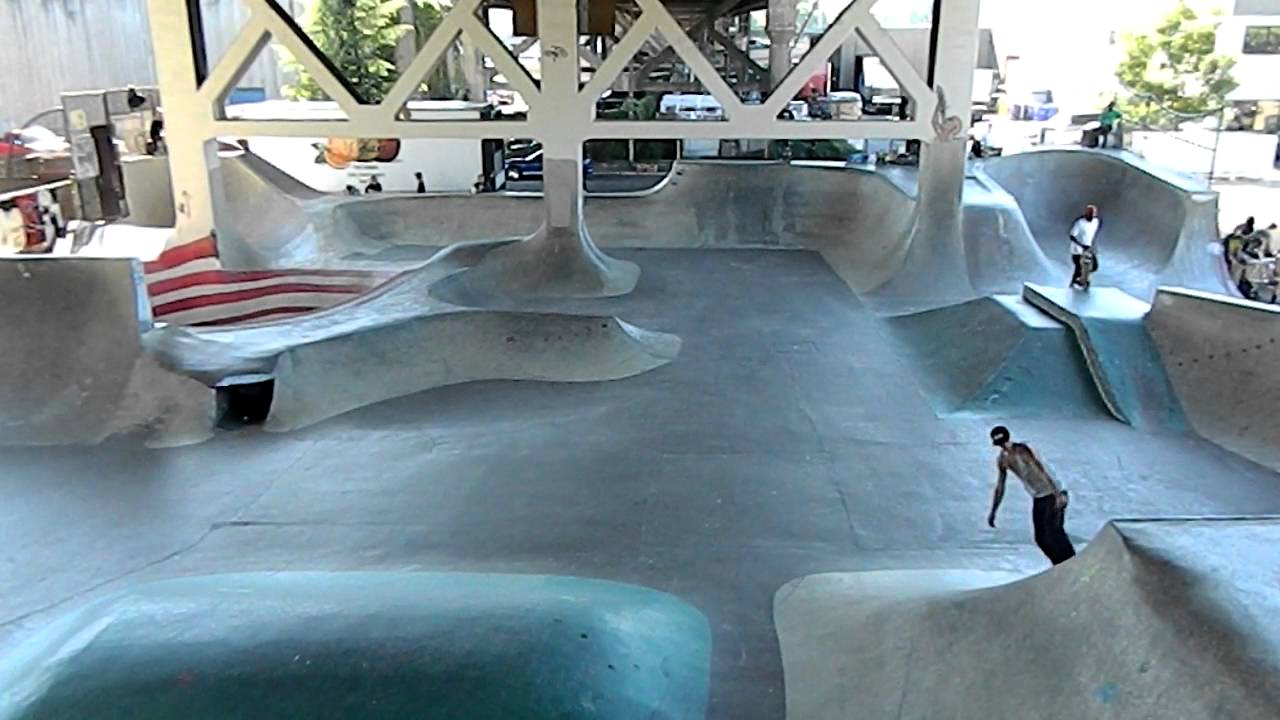
Following on from the previous post the M32 Communis a neglected space underneath the M32 Motorway in Eastville, Bristol. The space is desolate and brutally designed to keep people out. Yet, people from the community use this space, as well as skateboarders. Examples of spaces similar to M32 have been popular in North America but have been inspiring and spreading out across various sites worldwide.

Operating as a grassroot self-build skate-park has been built by the DIY community who used waste collected from the area to become the building blocks of this popular space. It is the only free undercover skate-park in Bristol, and known worldwide in the self-build skate-park communities. Since the skateboarders have become guardians of the space, prostitution and drug pushing have gone down and the the space is less frightening to local residents.

A number of organisations and individuals across Bristol are involved in reclaiming the neglected M32 underpass for the community, and support the M32 Spot DIY skatepark. Together we want to tackle the environmental and social issues creatively, connect a divided community and improve the well-being for everyone.

The actors and agents involved include:

  • LitterARTI, a local non-profit community organisation, who works with local communities to tackle social and environmental issues creatively. They have been working with the community of Eastville over the last year and a half doing creative projects and interventions;
  • People’s Republic of Stokes Croft, who brings experience of improving public spaces and curating street art in public spaces including the Bearpit and Stokes Croft in Bristol;
  • DIY Bristol and the building crew of the M32 Spot;
  • Local residents;
  • University of West of England: Including students from film-making, architecture, entrepreneurship and art departments.


A crowdfunding campaign was set up in June 2017 by LitterARTI to improve the DIY skatepark and the community space. Read more about it here, and see the video here.

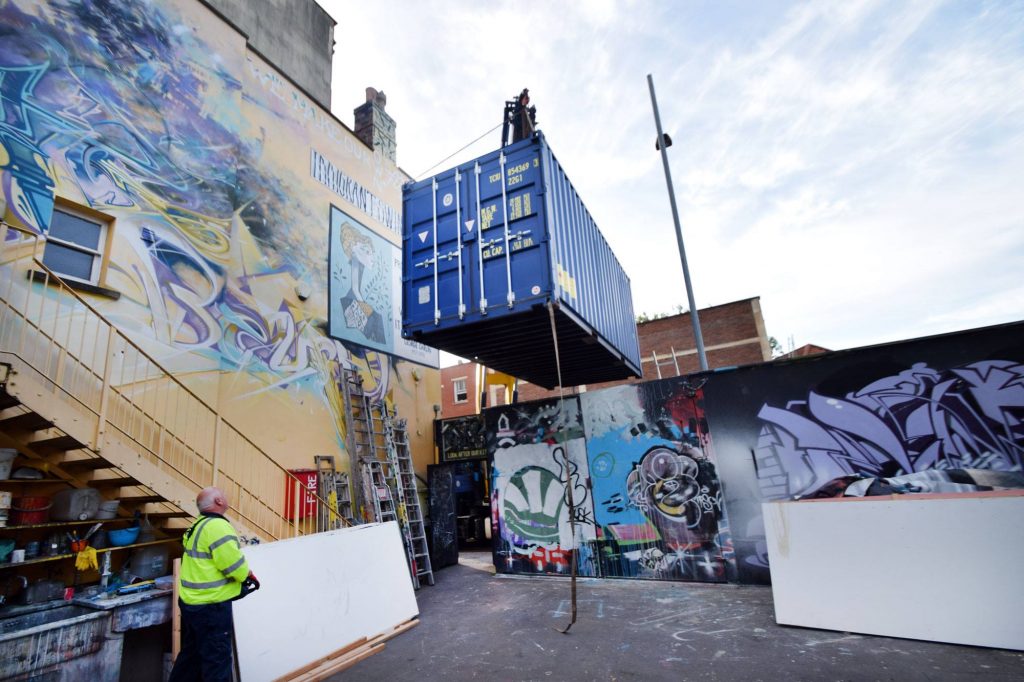
As there are no facilities under the M32, including water supply or storage, a shipping container gives secure storage to place tools and materials which will allow them to carry out further work going forward.

LitterARTI partnered up with People‘s Republic of Stokes Croft who kitted out the container in the PRSC Yard, ready for installation under the space. Half of the container is for the skatepark building team, which will allow them to do repairs to existing ramps and equipment, and start replacing the noisy wooden ramps with concrete ones.

Burnside Skate-park, Portland

Built without permission, by skateboarders, Burnside is the preeminent example of action.  Burnside’s unique growth and evolution -through the sweat and blood of a handful of dedicated individuals- have matured into one of the best skate-parks in the world.  Burnside and its creators are true pioneers, setting the stage for community built skate-parks across America.

Many spaces beneath freeway overpasses have been co-opted by skateboarders.  Burnside Skate-park, like many under-freeway skate-parks, was illegally constructed by groups of skateboarders over time. Eventually, this park, like some other skate-parks, won the favor of the city and became officially sanctioned.


Image result for burnside skatepark

“At the time of it’s creation, nothing like it had ever been done. Sure, there had been other skate spots that had been modified to be more skateable, but never had a bunch of skaters gotten together and created an entire skate-park by themselves. It was unheard of. And the quality of the park was much better than a lot of the parks in existence at the time too.”


Related image

I find it intriguing the way in which this space was user built and evolved and steadily improved over a span of years into something professional but still true to its roots. This provocative action lead project eventually becoming recognised officially and operating as The Burnside Skate-park Non-profit for fundraising and organisation.

The Full Story:

http://burnsideproject.blogspot.co.uk/

Skate-parks inspired by Burnside have been taking on and maintaining dead or abandoned spaces in Cities all over the world.  Thinking propositionally  it would be interesting to see what activity space could look like underneath the Tinsley Viaduct taking over the inbetween space currently unused.

Underpass Park, Toronto

A notable development in this trend is Underpass Park, a new 2.5-acre public park now under construction in Toronto. The park re-uses the dead space beneath and around two freeway overpasses near the city’s downtown and right next to the Don River. The formerly derelict site will be reborn as a more inviting public space, with tree plantings, seating areas and walking paths. It’s part of a broader plan to develop the West Don Lands precinct into a new mixed-use neighborhood. Underpass Park will be the first major element of that plan.

Sharrow Community Forum. “Made in Sharrow”

Workshops, birthday parties and much more, Sharrow community forum have a great workshop in the old junior school. The workshops are delivered by experienced and professional individuals alongside qualified youth workers, there is an IT suite adjacent to the workshop equipped with design software and standard packages to help develop basic IT skills.

“In February 2017 Sharrow Community Forum obtained a second hand CNC router and, after some extremely heavy lifting, installed it in the former Art Room at the back of the Old Junior School.  Working with artist and maker Chris Jarrett, our staff learned to operate the CNC machine and use design software. This summer we supported young people from Onboard Skate-Park, and Adventures Youth to design and build furniture, balance boards, a grind box, and a brand new sign for Highfield Adventure Playground.  We have begun delivering a series of public workshops ranging from Introduction to CNC, sessions for 11-16 year olds, and CNC for ESOL students.”

The Made in Sharrow workshop is space for people of all ages and abilities who want to develop their design and manufacture skills, improve their employability, or just spend some time enjoying the process of making. The project supports people to design and make a wide range of bespoke items including furniture, signs, and much more using CNC Router design and production techniques. The workshop offers people the chance to learn design and woodwork skills in a friendly and safe environment.  The beauty of CNC is that whatever a learners skill or experience level, provided your design is works, they can take away a high quality product that they can feel proud of.

The workshop space is available to for hire at £12 an hour.

Something similar could be done in Tingas maybe?

Made-in-Sharrow-blue-768x519

A ‘Tyred’ Intervention for a ‘Tyred’ Street

image

Just like many places surrounding Tinsley, Greasbro Road suffers significantly from traffic of heavy goods vehicles. Not only is the ‘noise’ of these vehicles noticeable but its also detrimental to the health and wellbeing of the residents. More specifically, this doesn’t make the street a safe place for children to play, as well as not having access to a nearby play area anyway.

The issues of traffic down the street has led to the development of an intervention at the entrance of Greasbro Road which denies ALL traffic, including that created by the residents. Though controversial, the purpose of the intervention is to see how the residents would use the street if it was completely traffic free.

image

Tyres not only represent the issue but can also be up cycled and used as a way of building a physical barrier to stop traffic from entering the street. They require no fixing and can also be filled with soil and used as planters by the residents. They are also commonly used for play areas as climbing apparatus’ and swings.

How would you use a traffic free street?…..

image


Calendar for Tinsley Aquaponics Centre

calandaryear-1

I have developed a cycle of plants to be grown on the aquaponics system to provide food for several cultural events in Tinsley. The decision to expand the amount of festivals came after feedback that using the system to create food for one specific event would require a full year of work and would not be worth the effort. Plus, there was little to get people outside the Roma community interested enough to attend the events, a wider variety of events would attract more people. I have researched festivals that take place in Pakistan, Yorkshire and Roma culture to create a series of events with meals that can largely be grown on the aquaponics system. Some of the ingredients would be more suited to grow on Tinsley Allotment or just in the ground outside, such as carrots and potatoes as they are more sensitive to water and grow better naturally and the rapeseed oil on the roundabout would also be use in the cooking.

The festivals are spaced one to two months apart to leave time to grow crops in between and fish will only be consumed at three of them because they take longer to grow. The carp will take a full year to be plate size whilst tilapia are fastest growing fish commonly used in aquaculture and are ready to be harvested after six months so two yields can happen every year. Ginger takes longer to grow but will also be able to be harvested for a period of six months so can be used at multiple events. Lettuce, cucumbers, tomatoes and peas all have far shorter growth times before they are ready to be harvested so can be grown in between individual festivals.

One example of the festival is Basant, which is held in February in Pakistan and involves a kite flying competition and eating yellow food, such as saffron rice and turmeric potatoes. The windy weather that time of year would be great for flying kites on Tinsley Green and the aquaponics could grow saffron and turmeric for ingredients to be added to rice and potatoes. Children from all groups could have fun flying kites whilst learning about or reconnecting with part of Pakistani culture. The festival has been banned in Pakistan since 2010 due to people using sharp string to gain a competitive advantage but risking hurting people but it would be simple to ensure that all kites were safe at a smaller scale. Tinsley Roundabout would also be starting to come into bloom adding to the yellow theme and the poster for this event is show below.

basantleaflet

An Anechoic Threshold

image

At the end of the northern terrace is an access route which leads down to the underpass to the M1 roundabout. What is generally considered as a very visible and open street, suddenly becomes an increasingly confined space as you leave the street on foot to access other areas of Tinsley via the underpass. The change in environment between Greasbro Road and the roundabout is dramatic through the chaotic sound of the traffic and to experience silence is merely impossible in Tinsley.

As my body of work develops through building a scenario and identifying where design is happening in my project, the threshold of the underpass could be an interesting space for an intervention that could demonstrate the severity of the noise pollution.

The Anechoic Chamber

image

An ‘Anechoic Chamber’ is a room designed to completely absorb reflections of either sound or electromagnetic waves. They are also often isolated from waves entering from their surroundings. Could this be achieved as an intervention in the underpass? As a form of ‘experience’ from one environment to another? The Anechoic Chamber would dramatically emphasis the volume of the traffic noise as you enter or exit the threshold space. The doors would have to be rubber sealed with the main internal space constructed of concrete and steal so the underpass makes the ideal climate for this to work successfully. The internal walls, floors and ceiling will be decorated in triangulated, sound absorbing, dense foam to absorb the sound waves. It is said that the experience can be so surreal that people have only been able to experience such a space for no longer than 45 minutes.

image

This would be one of potentially many examples of threshold interventions that express the surroundings of Greasbro Road and the issues associated with pollution. At the same time, this would emphasise the importance in creating quite areas within the new housing development as part of the proposal.

Tinsley Community Enterpise

After closely analyzing Sheffield Heeley Farm and how it helped regenerate the Heeley community, I started looking at ways to use the same principles and replicate them  in Tinsley. Obviously the plan is not necessarily about creating another farm but to look at the idea behind it which is the “social enterprise”.

I then went on to try and create a proposal for a Tinsley Community Enterprise and to present that on a diagram (seen below).

Network Map.jpg

By using the old school space as the center of this CIC type of enterprise and with three main agents that form some of Tinsley’s long standing communities (The Allotment, New School/Tinsley Green and The Forum) the organisation would start to form.

Inspired by my Praxis 1 research, and more particularly from the work of Teddy Cruz I was fascinated by one of his projects called “Living rooms at the border”

Teddy Cruz- Living rooms at the border.jpg

Specifically, I wanted to focus on one of the housing types of the project, a Live-Work Duplex for artists. The way it works is that it exchanges rent for social service.
The idea was to apply that in the Tingas space but not just for artist. It could be anyone in need of accommodation or a workshop area that is willing to share his knowledge and skills with the community in exchange for that.

The social service would either be manual labor that would help expand the allotment and its trading capabilities, or to offer training courses and consultation services to the people that need them the most.

The purpose of this enterprise is to take what is already being done in Tinsley and by getting more people involved, expand and improve it.

My next step would be to try and create a viable business plan for this enterprise to see if it would actually work and also be self sustained.

An Analysis of Heeley City Farm

In order to understand more about how the Sheffield Heeley Farm works and sustains itself as a social enterprise, I needed an overview of what is really happening behind the image of the standard “farm”.  Main activities behind this Community-based organisation include but are not limited to:

– Supporting those in need using enterprise methods

– Running training programs (Language and Basic Skills)

– Creating Jobs (By developing mini enterprises)

– Emphasizing on long term unemployed adults,people with learning disabilities, and those suffering disadvantage or discrimination.

Untitled-1.jpg


It Provides:
Environmental, health, food and farming education to around 5,000 school children and several thousands adult visitors per year

– much needed green space
– recycling
– healthy living facilities
– garden centre
– cafe
– charity shop
– day care for adults with learning difficulties
– vocational training in horticulture
– youth activities
– support for regular volunteers
Untitled-2.jpg


A History of Sheffield Heeley City Farm

Further to Sally Rogers’ presentation, and after looking at the work he has been doing at Sheffield Heeley Farm, I got interested particularly in what that Farm is all about. I decided to look a bit further into that and started looking for some more information.

Heeley City Farm is built on land that use to be many houses. In the 1960s/70s Sheffield City Council agreed on a controversial by-pass and the landscape changed.

In 1963, Sheffield City Council approved plans for a bypass through Heeley to run parallel to London Road, below Anns Road. Heeley residents realised that this would be a “through-pass” not a by-pass, completely splitting the local community. There was massive local opposition.

In 1978 the by-pass plans were finally dropped. But by this time, residents living on its proposed route had faced 15 years of uncertainty and insecurity. Their homes weren’t eligible for improvement grants, and repairs didn’t seem worth doing. The long period of blight had made it too late to save the immediate neighbourhood from demolition.

Demolition on the farm site took place between 1978 and 1981. During that period, it was hard to imagine Heeley as anything except a sea of dust and destruction. With the by-pass plans defeated, the Council didn’t have many ideas of what to do with the land. No money was available for building new houses. The only plans the Council could come up with were to use the land for light industrial development.

Heeley Residents Association wanted to see the land used to make Heeley a better place to live. During 1980 the Association developed the idea of a city farm, and gradually won support for it. Work began on site in July 1981 and the Farm was founded. Over the following years Heeley City Farm had to fight one major battle after another for money and security but the enthusiasm of workers and residents won through. The Farm grew organically over the years from it’s early days with a shed and £25 in the bank, and soon became a well-loved part of the Heeley landscape providing beautiful green spaces and education, employment, and training opportunities.

Heely area and Tinsley can be directly related if we look at both of their history. Both of them have been destroyed by the construction of bypassing roads. Heeley area however, unlike Tinsley, managed to regenerate the lost plots of land and create something unique. The idea is, by closely looking at Heeley Farm and how it works, to try and replicate that in Tinsley. That would, theoretically regenerate the community, spark an economic development and help bring the divided communities together.